
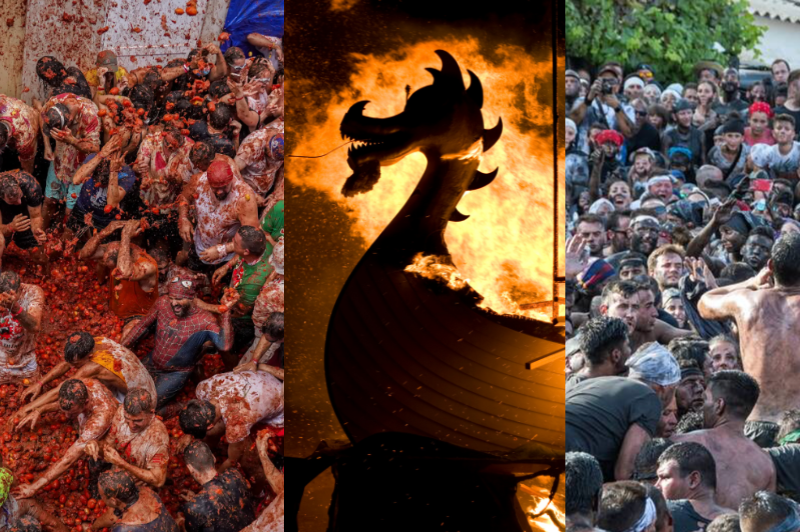
Europe is home to countless festivals and traditions, but some celebrations go far beyond the ordinary. From cheese-chasing, to Vikings burning ships, these events showcase the continent’s most eccentric and fascinating cultural traditions. Here are 10 unique European events that will leave you amazed, entertained, and perhaps questioning human sanity. 😉
1. Up Helly Aa – Scotland’s Viking Fire Festival
Location: Lerwick, Shetland Islands, Scotland
When: Last Tuesday of January
Official Website: https://www.uphellyaa.org/up-helly-aa-2026/
In the remote Shetland Islands, winter darkness is illuminated by one of Europe’s most spectacular fire festivals. Up Helly Aa. It celebrates the islands’ Norse heritage with a dramatic torchlight procession culminating in the burning of a full-scale Viking longship.
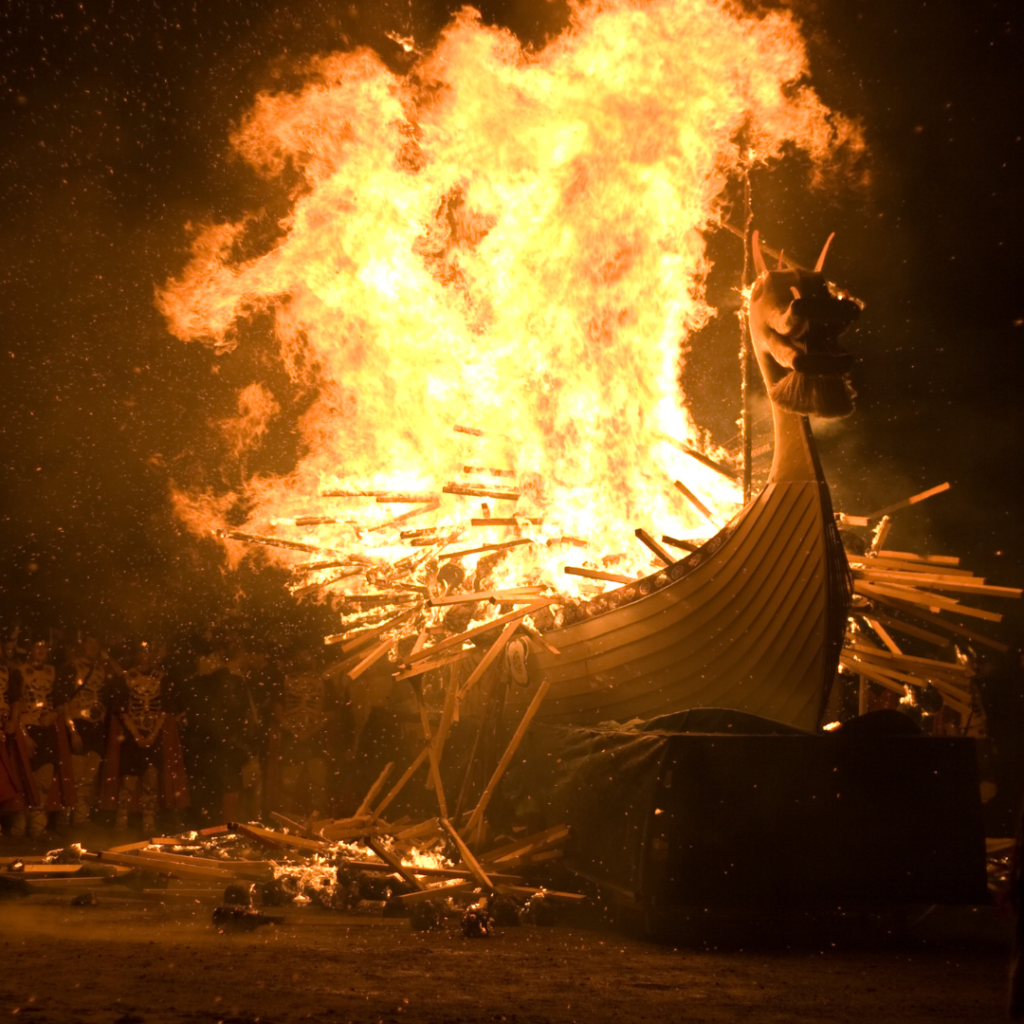
Nearly 1,000 costumed participants. They are led by the Guizer Jarl (chief Viking), march through Lerwick carrying blazing torches. The handcrafted galley, built specifically for the festival, becomes a magnificent inferno as participants hurl their torches into it while singing traditional songs. The festivities continue through the night with parties across the town.
The festival only began in its current form in the 1870s. When townspeople created a more organized alternative to the chaotic tar-barrel rolling that preceded it.
2. Almabtrieb – The Alpine Cow Parade
Location: Austria, Switzerland, Germany (Alpine regions)
When: September to October
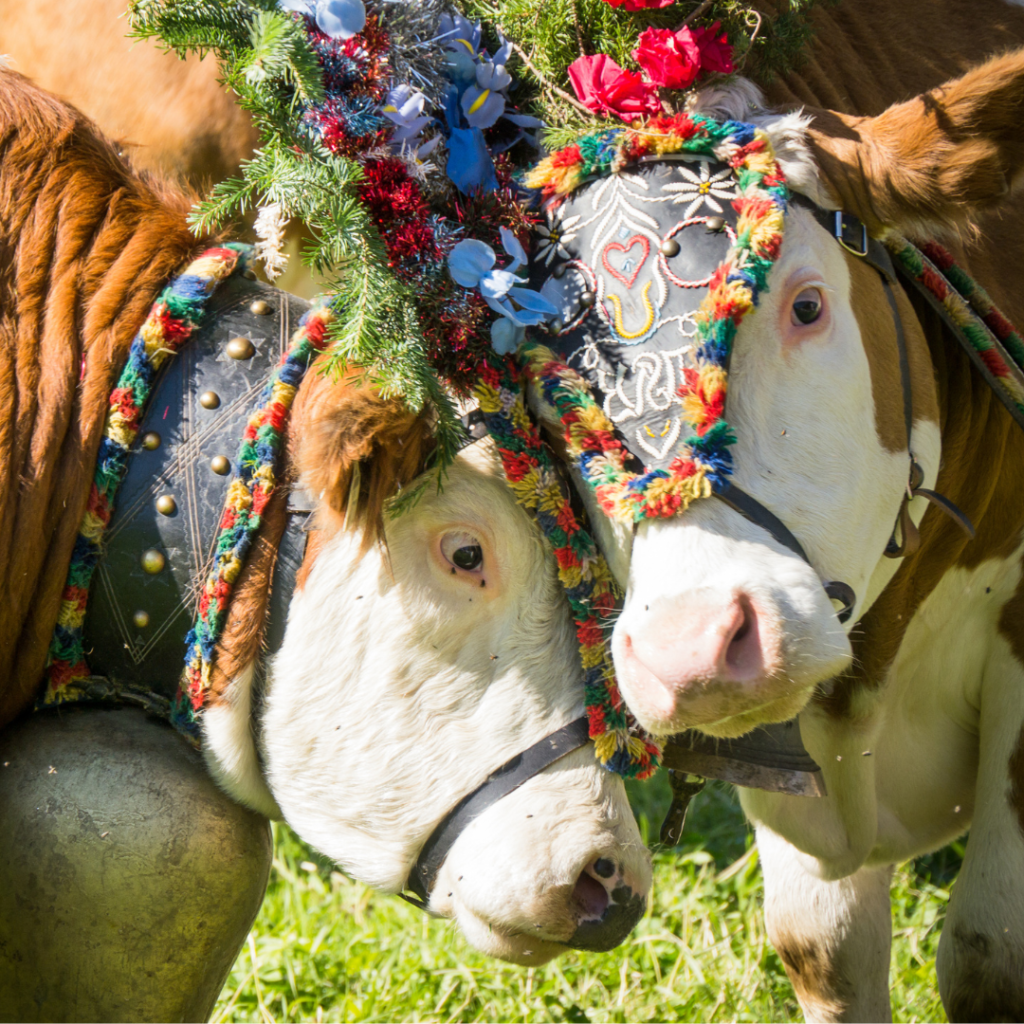
After spending summer months in high Alpine meadows, decorated cows make their triumphant return to valley farms in what might be the world’s most charming parade. The cattle wear elaborate flower crowns and headdresses, with the lead cow sporting the most impressive decorations.
Farmers dress in traditional outfits, and massive cowbells create a melodic soundtrack as the procession moves through mountain villages. The celebration marks a safe summer season – if no accidents occurred in the mountains, the cows are decorated; if there were incidents, they return unadorned.
3. La Tomatina – The World’s Biggest Food Fight
Location: Buñol, Spain
When: Last Wednesday of August
Website: https://tomatina.es/en/
Over 20,000 participants converge on the small town of Buñol for one hour of tomato-throwing. Trucks loaded with more than 100 metric tons of overripe tomatoes unload their cargo, and participants pelt each other with the squishy fruit until the streets run red.
The chaos begins with a traditional “palo jabón” contest – contestants attempt to climb a greased pole to retrieve a ham. Once someone succeeds (or at 11 AM, whichever comes first), a rocket signals the start of the tomato battle.
What makes it unique: The festival started spontaneously in 1945 when a food fight broke out during a parade, and despite being banned under Franco’s regime for lacking religious significance, the tradition persisted and became an official international tourist attraction.
4. Cascamorras – Spain’s Paint and Oil Festival
Location: Guadix and Baza, Granada, Spain
When: September 6-9
This lesser-known Spanish festival involves thousands of participants covering each other in black oil in Baza and colored paint in Guadix, all centered around a 500-year-old dispute over a statue of the Virgin Mary.
According to legend, a worker from Guadix found the sacred statue in Baza. The towns agreed that if someone from Guadix could reach Baza’s church without getting dirty, they could claim the statue. Every year, up to 20,000 people ensure the “Cascamorras” fails this challenge by smearing him (and each other) with oil as they run through the streets.
What makes it unique: Participants must liberally coat themselves in baby oil beforehand to make cleanup easier afterward – a practical consideration for such an incredibly messy tradition.
5. Battle of the Oranges – Italy’s Citrus Combat
Location: Ivrea, Piedmont, Italy
When: February (Carnival season)
Website: https://www.storicocarnevaleivrea.it/en/2026-Program/Program-day-by-day/
Europe’s largest food fight sees nine teams of orange-throwers on foot battle against costumed figures riding horse-drawn carriages. Theis unique European event commemorates a medieval rebellion when townsfolk overthrew a tyrannical duke after a miller’s daughter bravely defied him.
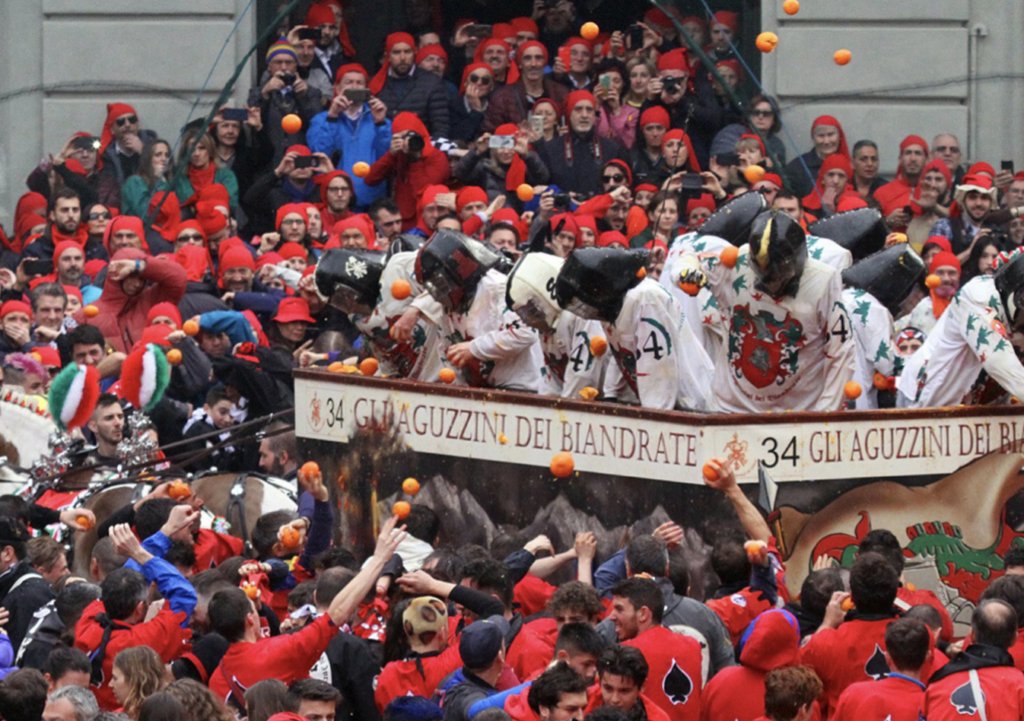
Nearly 900 tons of oranges – specially sourced from farms that would otherwise discard them – are hurled during three days of intense battle. The streets become rivers of orange pulp, and the citrus-scented air lingers for weeks.
What makes it unique? Unlike La Tomatina’s chaotic free-for-all, this is a highly organized historical reenactment with specific teams, territories, and centuries of tradition. Spectators must wear red “Phrygian caps” to signal they’re non-combatants.
6. Krampuslauf – Austria’s Terrifying Christmas Parade
Location: Throughout Austria, Germany, and Alpine regions
When: December 5-6
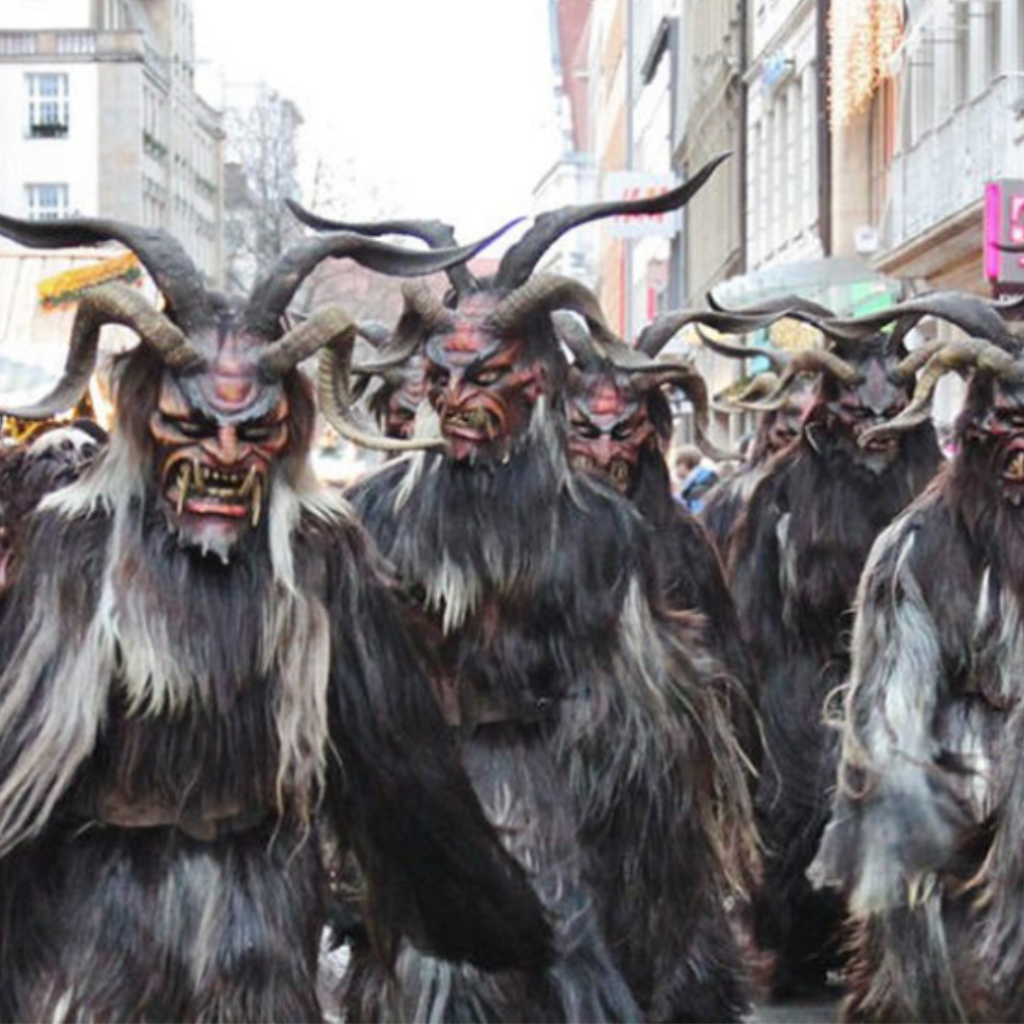
Forget jolly Santa Claus – in Austria, Christmas celebrations include Krampus, a horned, shaggy demon who punishes naughty children. During Krampus runs, hundreds of elaborately costumed performers wearing hand-carved wooden masks and carrying birch branches prowl through villages, chasing and playfully “punishing” spectators.
The costumes, weighing up to 50 pounds and featuring intricate hand-carved masks worth over €1,000, transform participants into fearsome creatures accompanied by deafening cowbells. The tradition predates Christianity and merges pagan winter solstice rituals with St. Nicholas celebrations.
What makes it unique: This Alpine tradition has exploded in popularity, with Krampus even appearing in Hollywood films, yet remains deeply rooted in local folklore and community pride.
7. Cooper’s Hill Cheese Rolling – England’s Dangerous Dairy Derby
Location: Cooper’s Hill, Brockworth, Gloucestershire, England
When: Spring Bank Holiday (late May)
Participants throw themselves down a near-vertical hill (1:2 gradient) chasing a 9-pound wheel of Double Gloucester cheese that can reach speeds of 70 mph. The first person to cross the finish line at the bottom wins the cheese – though catching it is virtually impossible.
The 200-yard descent typically results in spectacular tumbles, with very few contestants managing to stay upright. Despite safety concerns and the lack of official organization, the tradition continues with participants from around the world.
What makes it unique: Written records date to 1826, but the tradition may be over 600 years old. Even when officials tried to ban it in 2010 due to safety concerns, locals continued the event anyway.
8. Las Fallas, Valencia, Spain – Burning City
Location: Valencia, Spain
When: March 15-19
For five days each March, Valencia transforms into a living art gallery before becoming a city of flames. Las Fallas features hundreds of enormous papier-mâché monuments called “fallas” – some reaching 20 meters high and costing lot of money.
These spectacular sculptures, created by skilled fallero artists throughout the year, are displayed in streets and plazas citywide. But here’s the twist: on March 19th during “La Cremà” (the burning), every single monument except one is set ablaze in a coordinated inferno. The children’s fallas burn at 8 PM, followed by the main monuments at 10 PM, with the final falla in Plaza del Ayuntamiento erupting in flames at 11 PM.
Daily “mascletàs” (thunderous firecracker displays) shake the city at 2 PM from March 1st, while spectacular midnight fireworks light up the sky. The festival also includes the emotional flower offering, where thousands parade in traditional Valencian dress to create a massive floral tribute to the Virgin Mary.
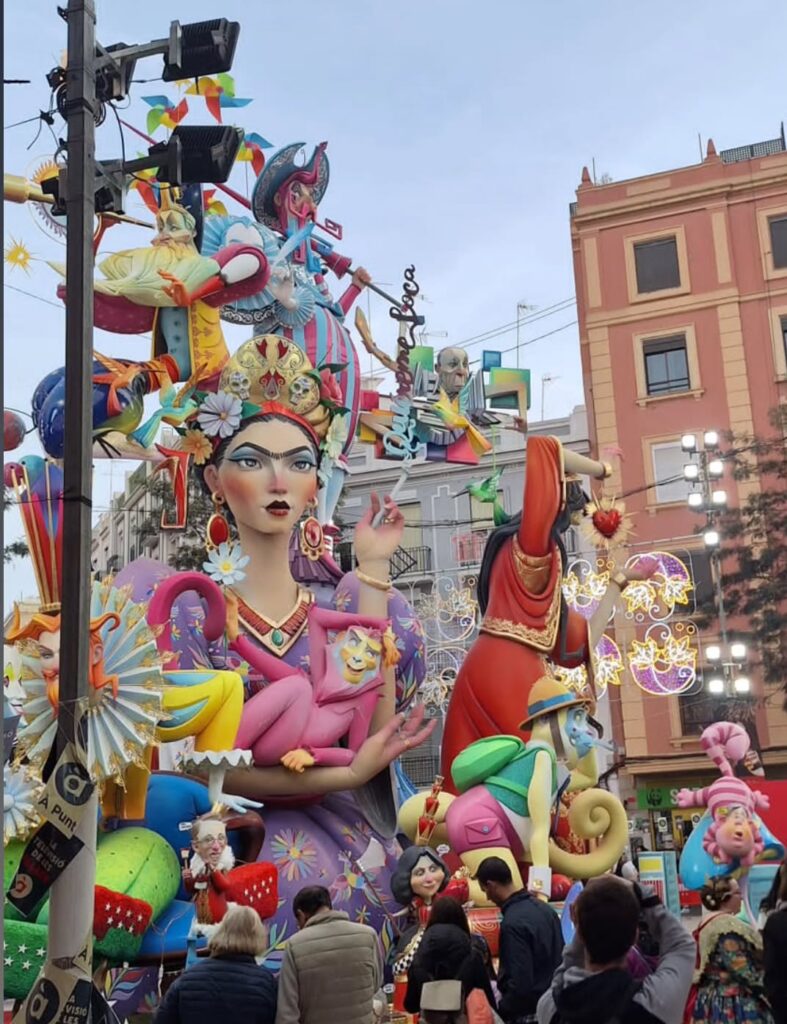
What makes it unique: Only one “ninot” (puppet figure) is “pardoned” by popular vote each year and saved from the flames to be preserved in the Fallas Museum – all others, regardless of their artistic value or cost, must burn to symbolize renewal and the arrival of spring.
9. Wianki Festival – Poland’s Midsummer Magic
Location: All Poland
When: Late June (around the summer solstice)
Ancient Slavic pagan traditions meet modern celebration along the Vistula River during Wianki (Wreaths Festival). Young women weave elaborate flower crowns and wreaths from wildflowers, herbs, and candles, then release them onto the river at dusk. Legend says if a wreath reaches the opposite shore, the woman will marry within the year.
Originally known as Kupala Night, this pre-Christian celebration honored fertility, fire, and water. Today’s festival blends these ancient customs with free concerts featuring diverse music genres across multiple stages throughout the city. The evening culminates with spectacular fireworks reflected in the river, while some traditionalists still jump over bonfires and practice fortune-telling.
What makes it unique: Unlike many European festivals that have become tourist attractions, Wianki remains deeply meaningful to locals while welcoming visitors. The UNESCO-recognized tradition survived centuries of suppression, including periods when celebrating it was a form of patriotic resistance during foreign occupation.
10. Wife Carrying World Championship – Finland’s Bizarre Romance
Location: Sonkajärvi, Finland
When: Early July (usually first weekend)
Website: https://eukonkanto.fi/en/front-page/
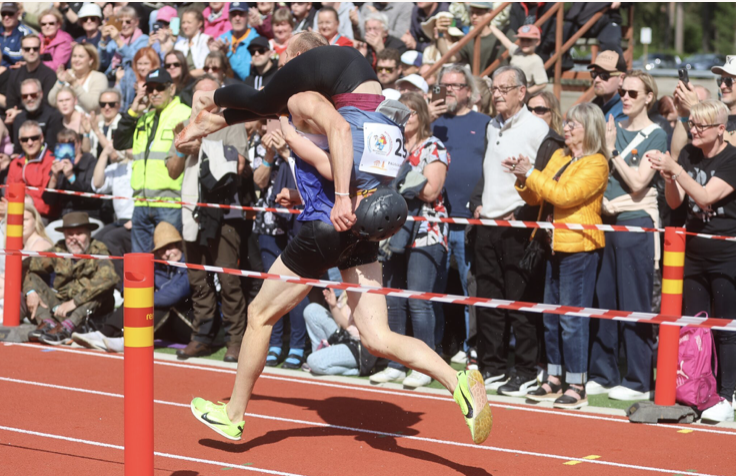
Finland takes relationship goals to absurd new heights with the Wife Carrying World Championship, where competitors race through a 253.5-meter obstacle course while carrying their female teammates. The grand prize? The wife’s weight in beer. Yes, really.
The race features two dry obstacles and one meter-deep water pool that competitors must navigate using one of three carrying techniques: piggyback (classic but slow), fireman’s carry (heroic yet prone to wipeouts), or Estonian-style (the woman hangs upside-down with legs around the man’s shoulders – the preferred method of champions). If the “wife” weighs less than 49 kilograms, she carries a backpack of beer to reach the minimum weight.
The competition traces back to 19th-century legend of bandit Herkko “Ronkainen the Robber,” who allegedly tested gang recruits by making them carry heavy sacks through obstacle courses – or, according to darker versions, stolen women. Since the first official championship in 1992, over 200 competitors from nearly 20 countries now compete annually, transforming Sonkajärvi into a weekend festival complete with live music, karaoke, and Finnish humor.
What makes it unique: Only Finland could turn folklore about a thieving bandit into one of the world’s most beloved quirky sports. The championship has inspired similar events across five continents, but Sonkajärvi remains the ultimate proving ground where trust, teamwork, and the promise of beer create unforgettable moments of controlled chaos.
Planning Your Unique European Events Adventure
These unique European events offer more than entertainment – they provide windows into Europe’s diverse cultural heritage and the communities that keep these traditions alive. Whether you’re dodging oranges in Italy, watching Vikings burn a ship in Scotland, or joining Austria’s demon parade, these festivals guarantee unforgettable experiences.
Tips:
- Book accommodation early – popular festivals fill hotels months in advance
- Respect local customs – these aren’t tourist shows but meaningful traditions
- Come prepared – protective clothing for messy festivals, warm layers for winter events
- Research safety – some events like cheese rolling and orange battles involve real risks
- Embrace the experience – participate respectfully and enjoy the unique atmosphere
When searching for unique European events to attend, consider the season of your travel and your tolerance for adventure. Summer brings tomato fights and midsummer celebrations, autumn features cow parades and harvest festivals, winter offers terrifying Krampus runs and Viking fire ceremonies, while spring delivers cheese rolling and burning monuments.
Each unique European event provides a window into the soul of its community, making them essential experiences for any traveler seeking to truly understand Europe’s rich cultural tapestry. Start planning your journey to these unique European events today – your most extraordinary travel stories are waiting to be written.
Why European Festivals Should Be on Your Travel Bucket List
Unique European events offer travelers far more than typical tourist attractions. Each tells a story of resilience, humor, and cultural identity that has survived through generations.
If you live in Europe and haven’t yet attended at least few unique European events like these, than let me ask you – what are you waiting for? 😀 And if you are reading this from far far away – just make sure whenever you will visit Europe – don’t just go to Paris, London and Rome – these are great cities, but fun and authentic vibe of Europe will often be found in other cities. 😉
The best part? Many of these festivals welcome international visitors with open arms, offering you the chance to participate rather than just observe and some are free to attend!
Which unique European events would you dare to attend?